


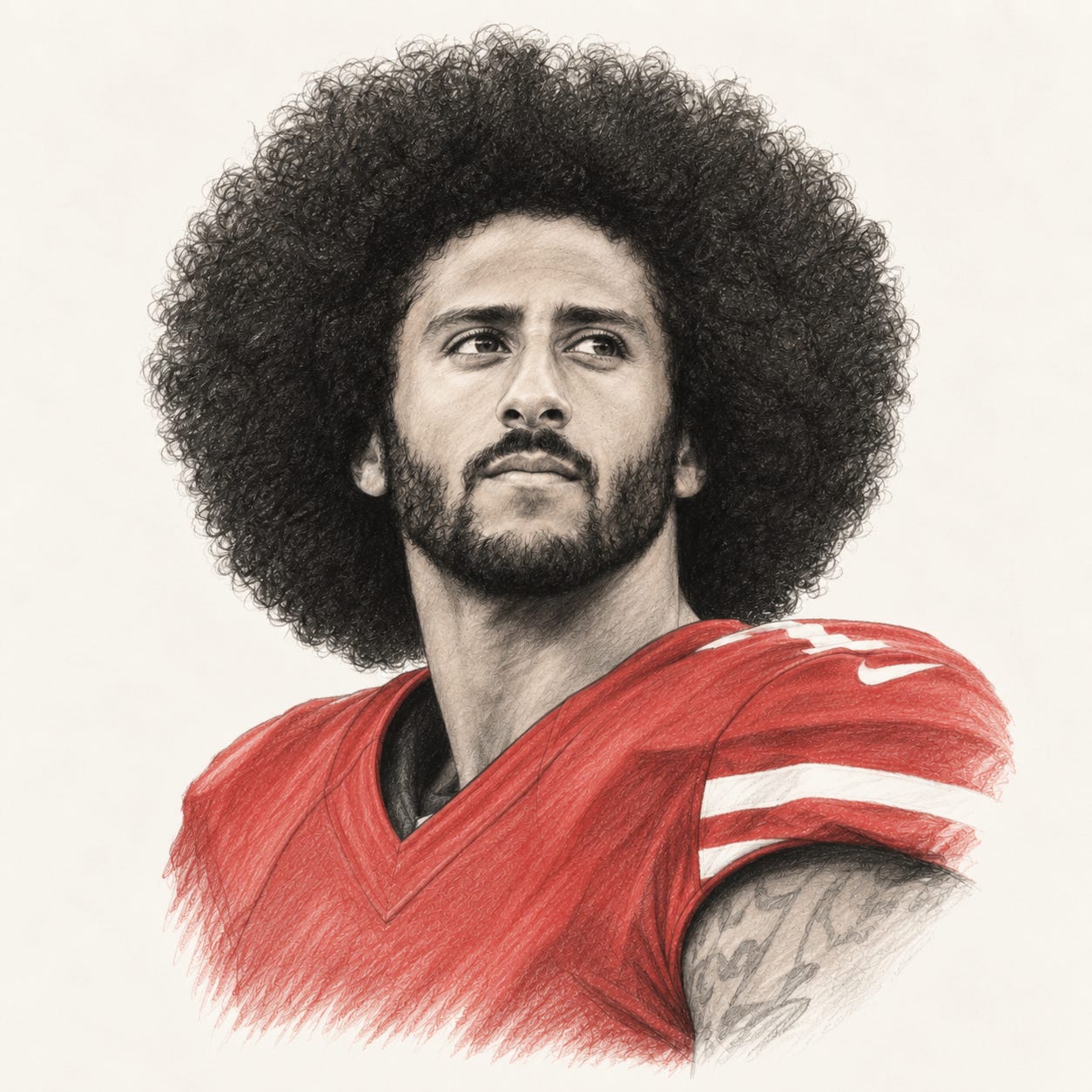
Colin Kaepernick still gets up before dawn to train for a job he hasn’t had in nearly ten years.
That stopped me when I heard it. His last NFL game was in January 2017. He had already taken a team to the Super Bowl. Then he knelt during the national anthem to protest police brutality, became one of the most polarizing athletes in America, and eventually found himself outside the league altogether.
Now, almost a decade later, his new memoir, The Perilous Fight, arrives at a remarkably interesting moment. Kaepernick is back talking publicly about what happened to him, what it cost him and what he believes the NFL owners were protecting when they decided there was no longer a place for him.
Meanwhile, he is still training.
He told Men’s Health that he gets up around 4:30 or 5 in the morning and works out five days a week. Sprinting. Plyometrics. Strength training. Quarterback work. He is 38 years old and has not taken an NFL snap in nearly ten years, but he still wants to be ready if the opportunity comes.
Some people will hear that and think he should have moved on years ago.
I hear something different.
Who Gets to Decide When You Are Finished?
We spend a lot of time talking about resilience as though it means bouncing back quickly. Lose the job, get another one. Lose the game, win the next one. Get knocked down, stand back up.
Life usually isn’t that tidy.
Sometimes the next opportunity doesn’t come. Sometimes the phone doesn’t ring. Sometimes you never get the explanation or apology you think you deserve. The people who closed the door move on with their lives while you are left standing on the other side trying to figure out who you are without the thing you spent years becoming.
That is what makes Kaepernick interesting to me now.
Football wasn’t simply something he did. He spent much of his life becoming a quarterback. Then that identity collided with something else he believed mattered enough to risk it.
We can argue forever about the politics of what he did. America already has.
The more interesting Strong Dynamics question is what happens after you make the choice and discover the price was real.
What do you do when conviction costs you something you actually wanted?
The Price of Not Falling in Line
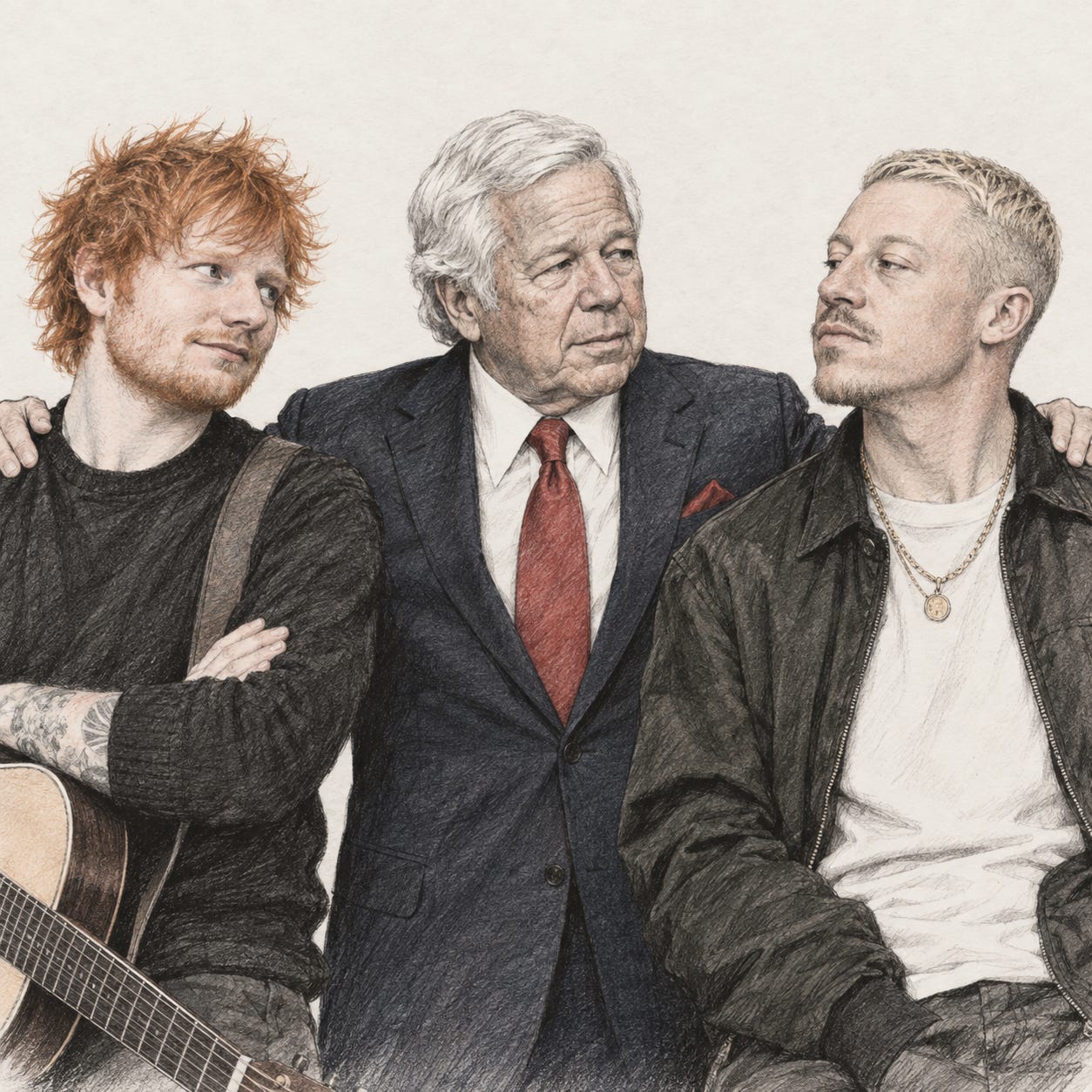
The timing of Kaepernick’s book makes that question even harder to ignore.
This week, while discussing the controversy involving Macklemore, Ed Sheeran and Robert Kraft, Kaepernick pointed directly back toward the power structure he says pushed him out of professional football.
Kraft acknowledged barring Macklemore from performing at Gillette Stadium after objecting to the artist’s political statements. Sheeran has said the decision was made by promoters and venues rather than by him. Kaepernick, speaking with MeidasTouch, described what happened as NFL owners “openly colluding.”
Whatever eventually comes of that particular dispute, you can understand why Kaepernick sees an echo.
A performer says something powerful people dislike. Access to the stage suddenly becomes conditional.
Kaepernick has lived that story.
And nearly ten years later, he is watching another version of the argument unfold around some of the same enormously wealthy institutions.
That feels remarkably full circle.
But the lesson isn’t that Kaepernick was right about everything or that everyone needs to agree with Macklemore. That would be too easy, and it would miss what interests me here.
The lesson is that occasionally life puts a very expensive question in front of us:
How much are you willing to surrender to keep your place in the room?
I wrote a song called Do the Right Thing, even when it costs you and even when they mock you.
Most of us will never answer that question with an NFL career on the line. But we answer smaller versions of it all the time.
We stay quiet in meetings. We negotiate against ourselves before anyone has even said no. We tolerate behavior because we are afraid of losing a relationship. We make ourselves smaller because somebody else controls the paycheck, the opportunity, the invitation or the next step.
Sometimes compromise is necessary. Adults compromise constantly.
But there is a line somewhere between compromise and abandoning yourself.
Kaepernick decided where his line was.
And then he had to live with what happened next.
When the Thing You Were Becomes the Thing You Used to Be
This is the part nobody prepares us for.
One day you are the quarterback.
Then you used to be the quarterback.
You are the executive, until you used to run the company. You are married, until you used to be somebody’s spouse. You are the parent raising five children, until the house gets quieter and the children have lives of their own. You are the athlete until your body says otherwise. You are the person everyone depends on until suddenly they don’t.
Those transitions can shake us because we confuse our roles with ourselves.
We say, I am a nurse. I am a coach. I am a CEO. I am a wife. I am an athlete.
Then life takes away the noun.
What remains?
Kaepernick’s answer, apparently, has been to keep working.
That doesn’t mean sitting by the phone for ten years. His life didn’t stop when football did. He built organizations, created publishing ventures, supported community programs and continued his activism.
But he also kept training.
I find that fascinating because there is an important difference between waiting and staying ready.
Waiting puts your life in somebody else’s hands.
Staying ready keeps it in yours.
Getting Back in the Game May Not Mean Going Back
I have been thinking a lot about the idea of getting back in the game. I even wrote a song about it called Get Back in the Game.
But Kaepernick’s story reminded me that getting back in the game doesn’t necessarily mean getting back into the same game.
We have a tendency to measure a comeback by whether someone recovers what they lost. The old job. The relationship. The money. The position. The status. The career.
Sometimes that happens.
Sometimes it doesn’t.
Maybe the harder comeback is building a meaningful life even when the old door never opens again.
Maybe you keep training because being ready matters to you, not because somebody has guaranteed you another chance.
Maybe you discover that the discipline developed for one field becomes useful somewhere completely different.
And maybe someday the phone rings.
If it does, you are ready.
If it doesn’t, you haven’t spent the last decade letting somebody else’s decision determine whether you kept growing.
They Don’t Get to Write the Last Chapter
People are remarkably comfortable deciding when somebody else’s story is finished.
Too old.
Too controversial.
Too difficult.
Too much time has passed.
Nobody wants you anymore.
Move on.
Kaepernick has certainly heard all of that.
Yet here he is, nearly ten years removed from his final NFL game, publishing a book called The Perilous Fight, talking publicly again about what happened, watching the argument over speech, power and access circle back through the league he left behind — and getting up before dawn to train.
Maybe he never plays another NFL down.
That doesn’t erase the lesson.
You cannot control whether somebody hires you, signs you, promotes you, chooses you, forgives you or finally admits they underestimated you.
You can control whether you are ready for whatever comes next.
You can also decide that the people who shut one door do not get ownership of the rest of your story.
Sometimes getting back in the game means somebody finally lets you back onto their field.
And sometimes it means realizing you don’t need their field anymore.
You can build your own.
Join My Team
StrongDynamics.com is about what happens when life doesn’t go according to plan — when the career changes, the relationship ends, the opportunity disappears or somebody else decides your moment has passed.
It is about what we do next.
If those are conversations you want to be part of, subscribe and join my team.
A free subscription brings every new Strong Dynamics article directly to you and helps this community grow. If you are able to become a paid subscriber, your support makes it possible for me to keep doing this work and writing about resilience, leadership, performance, identity and what it really takes to get back in the game.
Free or paid, I want you on the team.
Because somebody else may get to close a door.
They do not get to decide when your story is over.