


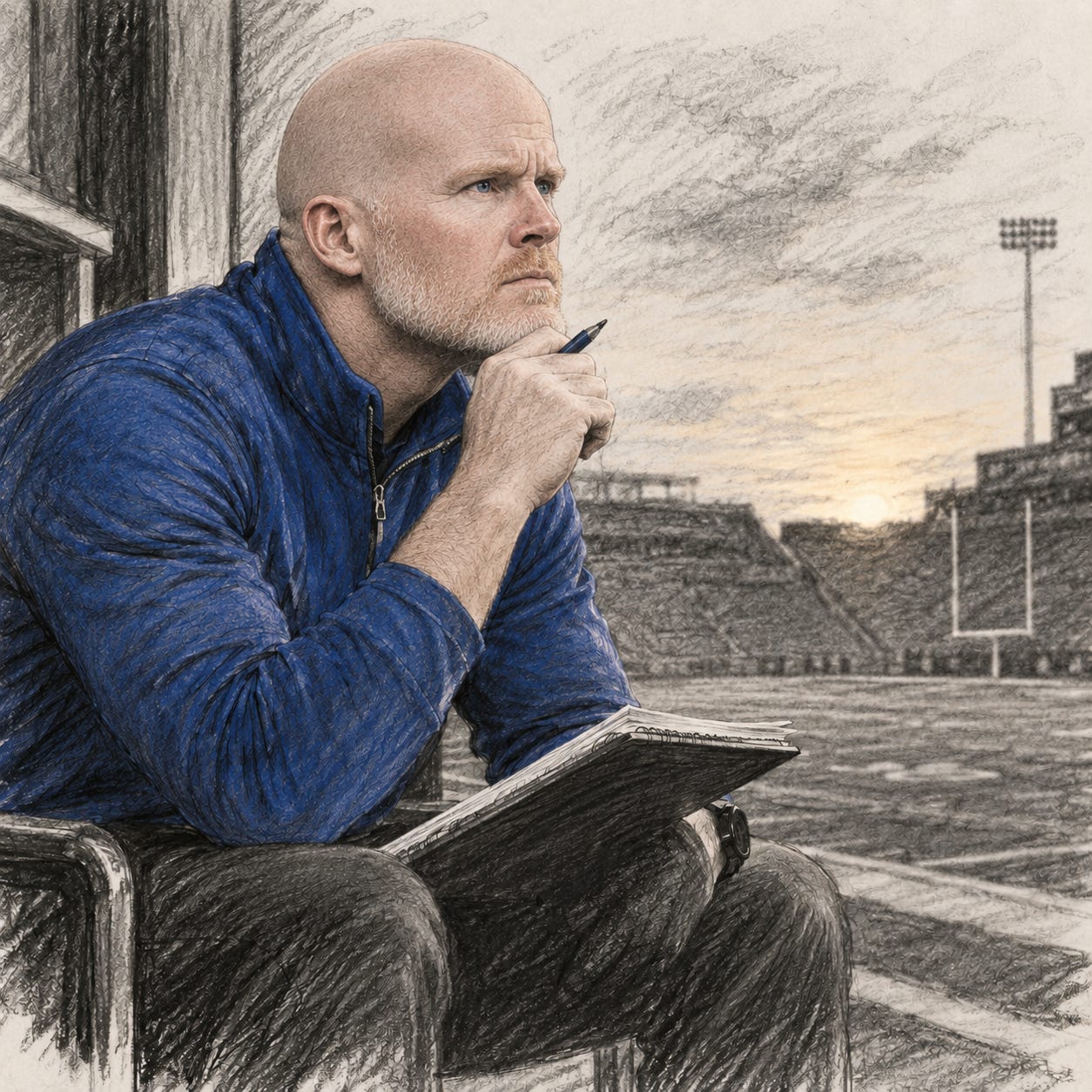
Sean McDermott was fired by the Buffalo Bills back in January. What makes his story worth writing about now is what he said on September 4 about what he has been doing ever since.
That happened on January 19, two days after Buffalo lost 33–30 in overtime to Denver in the divisional round of the playoffs. By then McDermott had spent nine seasons in Buffalo, helped end a 17-year playoff drought, taken the Bills to the playoffs eight times and compiled a 98–50 regular-season record.
Those are not the numbers of a man who did not know how to coach.
And yet Buffalo fired him.
Bills owner Terry Pegula explained at the time that the organization needed a different leadership structure if it was going to reach what had remained stubbornly out of reach: the next level.
That is what makes McDermott interesting to me now.
Nearly eight months after his firing, he appeared on The Rich Eisen Show on Friday, September 4, and talked publicly about what he has been doing with the time since Buffalo let him go. He wants to coach in the NFL again. He still wants to win a championship. But rather than simply waiting for another team to call, he has been doing something every coach, executive and leader ought to pay attention to.
He has been investigating himself.
When What Worked Stops Working
I coached hockey for a lot of years, and there is an uncomfortable reality in coaching that eventually catches up with everyone: something can work very well and still stop being enough.
That is harder to accept than simple failure.
Failure gives you an obvious instruction. Something is broken; fix it.
Success is trickier because success reinforces what you have already been doing. The system worked. The team won. The organization grew. People praised your leadership. So you keep doing more of whatever produced the success.
Until one day it doesn’t produce enough of it.
McDermott did not inherit a Buffalo team cruising toward a Super Bowl. He helped turn the franchise around. The Bills became consistent winners under him. They made the postseason almost every year. They became a team everyone expected to contend.
But they could not get through the final door.
Eventually the standard changed.
Getting to the playoffs was no longer the accomplishment. Winning the division was no longer enough. Even winning 10, 11 or 12 games did not answer the only question Buffalo had left.
Can you get us to the Super Bowl?
McDermott never did.
There is a lesson in that far beyond football.
Sometimes your greatest professional danger is not being bad at what you do.
It is becoming very good at something that no longer gets you where you need to go.
The Blind Spots That Come With Leadership
On September 4, McDermott told Rich Eisen that during his time away he has gone back to people he trusts from inside the Bills organization and asked what he might not have seen while he was running it.
He described the process in terms of finding his blind spots.
That caught my attention because leaders accumulate blind spots almost by definition.
The higher you move in an organization, the farther you can become from the experience of the people doing the work. Information reaches you after passing through other people. Bad news gets softened. Employees become cautious. Players learn the coach’s moods. Staff members figure out which conversations are worth having and which are more trouble than they are worth.
Sometimes nobody has decided to deceive the leader. The organization simply begins adjusting itself around the leader’s personality.
Then the leader mistakes the adjusted environment for reality.
McDermott has talked about recognizing that his intense focus on the work of coaching may sometimes have come at the expense of connecting personally enough with players.
I understand how that happens.
The work can consume you precisely because you care so much about getting it right. You prepare more. You analyze more. You solve another problem. You watch more film. You develop another plan. From your own perspective, you are giving the team everything you have.
Meanwhile, somebody on that team may be experiencing you as increasingly distant.
Both things can be true.
That is one of the hardest lessons in leadership: your intentions and somebody else’s experience of your leadership are not necessarily the same thing.
Get Out of Your Own Building
McDermott has done something else during this forced break that I particularly like.
He went to other people’s training camps.
He spent time around Sean McVay and the Rams, John Harbaugh, Ben Johnson and Mike Macdonald, watching how other NFL coaches run their programs and looking for things he can learn from them.
Think about how difficult it is for a head coach to do that while he is actually coaching.
The NFL schedule barely leaves time to run your own operation, never mind wander into somebody else’s and observe it with fresh eyes. McDermott suddenly had something he had not possessed for nine years: distance.
Distance can hurt when it comes because somebody has just taken away the thing that defined your professional life.
It can also teach you.
I have always believed coaches should remain students. The minute you become convinced that your experience means there is nothing left for somebody else to teach you, you have probably already begun declining.
Experience should expand curiosity, not replace it.
There is always another way to run a practice. Another way to communicate. Another way to organize a staff. Another way to reach a player who does not respond to you. Another coach who sees something you have missed.
The same applies in business. In medicine. In teaching. In parenting. In almost any work involving other human beings.
You can have 30 years of experience and still be wrong this afternoon.
Success Is Sometimes the Thing You Have to Outgrow
There is a tendency after someone is fired to rewrite the entire story as failure.
That does not make sense here.
McDermott succeeded in Buffalo.
He also eventually got fired from Buffalo.
We should be able to hold those two ideas at the same time.
He helped build something that became good enough to expect more than he was ultimately able to deliver. In a strange way, the standard that cost him his job was partly a standard he helped create.
That happens elsewhere too.
A founder builds a company with sheer force of personality and then discovers that the same hands-on style that worked with 12 employees suffocates an organization of 500.
A manager gets promoted because she solves every problem herself and eventually discovers that senior leadership requires her to stop solving everything herself.
An athlete succeeds on talent until everyone else at the next level has talent too.
A person spends decades becoming exceptionally good at a career and then technology, economics, age or circumstance changes the game.
None of that means what came before was a mistake.
It means the next chapter requires something different.
That distinction matters, particularly for people going through reinvention. We tend to think change is required only when we have done something wrong.
Sometimes change is required because what we did right already did its job.
Game Film for Your Own Leadership
One of the best things about sports is that eventually you have to look at film.
Memory is generous to us. Film is not.
You remember what you meant to do. Film shows what happened.
You remember what you told the player. Film may show that your instruction was impossible to execute from the situation you put him in.
You remember the mistake that cost the game. Film may show five earlier mistakes that made that final play matter.
Good coaches do not watch film simply to find somebody to blame. They watch because the game contains information.
Leadership needs game film too.
Sometimes that means asking people who worked for you what they saw. Sometimes it means looking closely at who left your organization and why. Sometimes it means comparing what you thought you communicated with what people actually heard. Sometimes it means walking into another successful organization and resisting the urge to explain how you would do everything.
Just watch.
That appears to be what McDermott has been doing.
And there is something refreshing about a man who still clearly believes he can coach at the highest level being willing to entertain the possibility that the next version of Sean McDermott should not be identical to the last one.
The Coach Doesn’t Play the Game
I wrote here recently that the coach does not play the game. A coach prepares people to make decisions and perform when the coach cannot step onto the ice and do it for them.
There is another side to that.
Because the coach is not actually playing, he can never see the game exactly as the players do.
That is why listening matters.
Leadership gives you perspective, but it also creates distance. The trick is using the perspective without allowing the distance to make you blind.
McDermott may get another NFL head-coaching job. He may not. If he does, there is no guarantee that visiting successful coaches and examining his blind spots will produce a championship.
Leadership does not come with those kinds of guarantees.
But he has already done something important with what could easily have become seven months of resentment.
He turned it into study.
He went looking for what he did not know.
He asked other people what they could see that he could not.
And instead of treating 98 wins as evidence that he had nothing left to learn, he seems to be treating those wins as the foundation for whatever he learns next.
That is the lesson I want to carry beyond football.
What got you here does not have to have been wrong for it to be insufficient to get you there.
Sometimes the hardest part of getting back in the game is accepting that you cannot return as exactly the same person who left it.
That is what Strong Dynamics is becoming: a place where I can take what sports have taught me about coaching, competition, leadership, resilience, failure, success and starting over, and carry those lessons beyond the rink or the field.
If that sounds like a conversation you want to be part of, join my team here. Free subscribers help me build the community. Paid subscribers help me keep doing the work and give this new publication room to grow.
We’re just getting started.
Sources
Buffalo Bills, January 19, 2026 — announcement of Sean McDermott’s firing after nine seasons as head coach.
The Rich Eisen Show, September 4, 2026 — McDermott discussing his time away, lessons from his departure, and visits with other NFL coaches.
September 8 reporting on McDermott’s effort to identify his leadership blind spots and seek candid feedback from people inside the Bills organization.